When Does a Plant Actually Need Repotting?
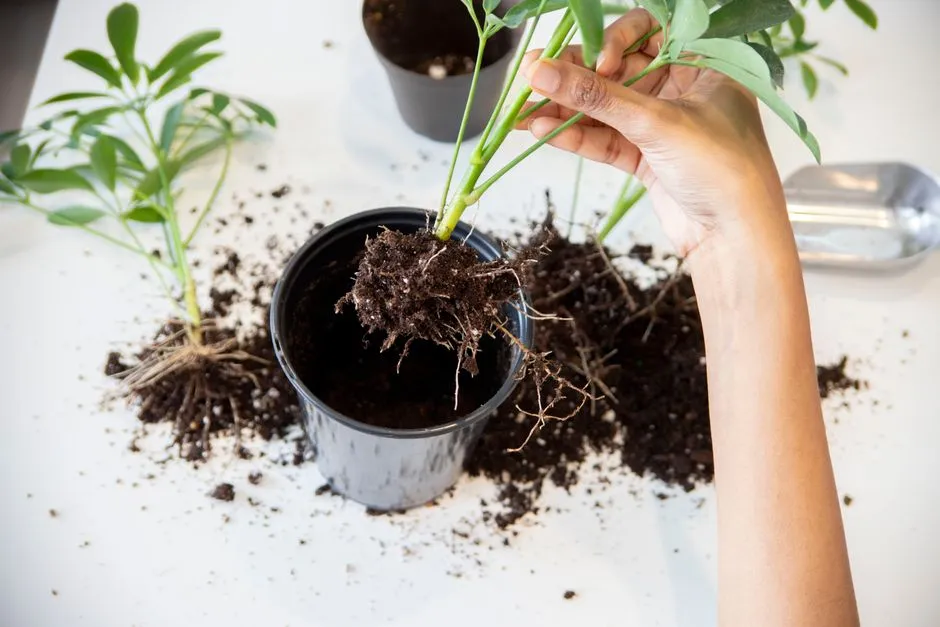
- Repotting Is a Response, Not a Routine
- First, Untangle What "Repotting" Actually Means
- The Signs a Plant Genuinely Needs Repotting
- The Signs People Think Mean "Repot" — But Don't
- How Root-Bound Is Too Root-Bound?
- When in the Year to Repot
- Sizing the New Pot: Bigger, but Only a Little
- The Repotting Itself, Briefly
- What to Expect Afterward
- The Takeaway
Repotting Is a Response, Not a Routine
Repotting is one of those chores people assume runs on a calendar, like changing a smoke-alarm battery. It doesn't. A plant needs a new pot when it gives you a specific reason to move it, and until then, disturbing the roots does more harm than good. Most healthy houseplants ask for it somewhere in the range of every twelve to eighteen months, and slow growers can go two or three years without a complaint. But that's a rough expectation, not a rule — the plant, not the calendar, tells you when.
Underneath all the signs, there are really only two reasons to repot. Either the plant has outgrown its container and the roots have run out of room, or the mix it's living in has broken down and stopped doing its job. Everything below is just a way of reading which of those two things is happening — and, just as usefully, recognizing the situations where the answer is don't repot yet.
First, Untangle What "Repotting" Actually Means
People use one word for three fairly different jobs, and knowing which one you need saves a lot of unnecessary root disturbance.
- Potting up — moving a plant into a larger container because it has genuinely outgrown its current one. This is what most people mean by repotting.
- Refreshing (same pot) — lifting the plant out, shaking off the tired old mix, and returning it to the same container with fresh potting mix. The right move when the soil has degraded but the plant hasn't outgrown its space.
- Top-dressing — scraping off the top inch or two of old, crusted mix and replacing it, without disturbing the root ball at all. A gentle refresh for large plants that are simply too big to lift out.
If your only problem is exhausted soil, you may not need a bigger pot at all — refreshing or top-dressing solves it while keeping the plant in a container it's happy in.
The Signs a Plant Genuinely Needs Repotting
None of these is decisive entirely on its own, but when two or three show up together, the plant is telling you plainly that it's out of room.
- Roots creeping out the drainage holes. A root or two poking through is the single clearest signal that the root ball has filled the pot and is hunting for more space.
- Roots surfacing on top of the soil, or a dense mat of roots visible when you look down into the pot. Sometimes the whole plant even lifts slightly above the rim, pushed up by its own roots.
- Water runs straight through and out the bottom almost instantly, barely wetting the mix. That usually means there's far more root than soil left to absorb anything — a classic root-bound pot.
- The plant dries out much faster than it used to, needing water every couple of days when it once held moisture for a week. Less soil means less water storage.
- Growth has stalled through spring and summer despite adequate light and feeding. A plant with nowhere for its roots to go often simply stops.
- The pot is bulging, cracked, or misshapen. Vigorous roots can visibly deform a thin plastic nursery pot, and have been known to crack terracotta.
- The plant is top-heavy and keeps tipping over, its container no longer able to anchor the mass of foliage above it.
- The mix has broken down into something dense and airless, or has shrunk and pulled away from the sides of the pot, or dried into a hard block that repels water.
Here's a quick way to sort what you're seeing into what to actually do:
| What you notice | What it usually means | The fix |
|---|---|---|
| Roots out the drainage holes | Root ball has filled the pot | Pot up one size |
| Roots circling on the surface | Root-bound; no room left | Pot up one size |
| Water rushes straight through | More root than soil | Pot up one size |
| Dries out far faster than before | Not enough soil to hold water | Pot up one size |
| Growth stalled in the growing season | Roots have nowhere to go | Pot up one size |
| Soil compacted, sour, or crusted | Mix has degraded | Refresh mix, same pot |
| Soil shrunk away from the pot's sides | Old mix has broken down | Refresh or top-dress |
| White crust on soil or pot rim | Mineral salt buildup | Refresh mix; flush when watering |
The most reliable check of all is simply to slide the plant out and look. Ease it from the pot — watering a day beforehand makes this easier — and inspect the root ball. Roots wound tightly around and around in the shape of the pot, with little soil still visible, mean it's time. Roots that still have soil between them, with room to grow, mean you can wait.
The Signs People Think Mean "Repot" — But Don't
This is where a lot of well-meaning plant owners go wrong, because repotting feels like doing something helpful. Often it isn't the answer.
- Yellowing lower leaves. Far more often a watering or light issue than a space issue. Repotting a plant that's actually being overwatered just buries the real problem under fresh mix.
- The plant simply looks big. Size above the soil doesn't tell you what the roots are doing. A large plant can be perfectly comfortable in a proportionally modest pot.
- "It's been a year." Time on its own is not a reason. A slow grower in intact mix with room to spare doesn't need moving just because a season has passed.
- A few brown tips or a droopy afternoon. These are day-to-day care signals — humidity, thirst, a hot window — not a demand for a new home.
- Root rot. Here's the important distinction: if you find soft, brown, foul-smelling roots, you will end up unpotting the plant — but the reason is the rot, not the pot size, and the goal is to cut away dead tissue and replace soggy soil, not to size up. If that's what you're dealing with, our guide to diagnosing and treating root rot walks through the rescue step by step. Moving a rotting plant into a bigger pot full of more moisture-holding mix usually makes things worse.
The general principle: repot to solve a root-space or soil problem you've actually confirmed. Don't repot as a vague tonic for a plant that seems "unhappy," because you may just be trading a fixable problem for a fresh case of transplant stress.
How Root-Bound Is Too Root-Bound?
Honestly, this is a point where reasonable growers disagree, and it's worth being upfront about that. A plant can be slightly pot-bound without being in any distress — roots filling the pot but still functioning fine. Some plants even seem to prefer it. Peace lilies, spider plants, and a number of others are often said to bloom or produce offsets more freely when their roots are a little crowded, and many people deliberately keep them snug for that reason.
So "root-bound" isn't automatically an emergency. The line worth watching for is the point where crowding starts to cost the plant something: water running straight through, growth stalling, the plant unable to stay hydrated between reasonable waterings. Snug is fine. Strangled is not. When the pot has become a solid mass of circling roots with barely any soil left, the plant has crossed from cozy to constrained, and it's time to move.
When in the Year to Repot
For elective potting-up — the plant is fine, just growing out of its space — the best window is spring through early summer, when the plant is in active growth and recovers from disturbance quickly. A plant putting out new roots and leaves knits itself back into fresh mix far faster than a dormant one.
That said, don't treat the season as a hard gate. Two honest caveats:
- Emergencies override the calendar. Root rot, a shattered pot, a pest infestation in the soil, or a plant so root-bound it's declining — deal with those whenever they happen, winter included. A struggling plant won't thank you for waiting until May.
- Repotting in autumn or winter isn't forbidden, it's just slower to recover. If you must do it off-season, expect the plant to sit quietly for a while and be especially careful not to overwater it in the meantime.
Sizing the New Pot: Bigger, but Only a Little
The most common and most damaging repotting mistake is jumping to a pot that's far too large, on the logic that more room means more growth. It doesn't. A small root system surrounded by a huge volume of mix sits in soil that stays wet long after the roots have taken what they need — and constantly wet soil is exactly how root rot starts. Go up modestly.
| Current pot size | Move up to | Rough increase |
|---|---|---|
| Small tabletop (under ~6 in / 15 cm) | One size up | ~1–2 in / 2.5–5 cm wider |
| Medium (~6–10 in / 15–25 cm) | One size up | ~2 in / 5 cm wider |
| Large floor plant (over ~10 in / 25 cm) | One size up | ~2–4 in / 5–10 cm wider |
One size larger in diameter is almost always right. Whatever the pot, it must have a drainage hole — no exceptions worth making. Material is largely down to preference: terracotta is porous and dries the soil faster, which suits plants that hate staying wet; glazed ceramic and plastic hold moisture longer, which suits thirstier plants and forgetful waterers. What goes into the pot matters at least as much as the pot itself; if you're unsure what your plant wants to live in, our breakdown of potting mixes covers matching the blend to the plant.
The Repotting Itself, Briefly
- Water a day ahead. A moist root ball slides out cleanly and handles the move with less shock than a bone-dry one.
- Ease the plant out. Tip the pot, support the base of the stems, and coax it free. Squeeze or tap a stubborn plastic pot; run a knife around the inside of a rigid one. Never yank it out by the stem.
- Look at the roots, and loosen if needed. Gently tease apart roots that are circling tightly so they'll grow outward into the new mix rather than continuing their loop. Snip away any that are clearly dead, black, or mushy.
- Add fresh mix and set the plant at the same depth. A layer of new mix in the bottom, the plant centered, and soil filled in around the sides — keeping the plant at the same level it sat before. Burying the stem deeper invites rot.
- Firm gently and water in. Press the mix lightly to remove big air pockets, then water thoroughly to settle everything and close the gaps around the roots.
- Hold the fertilizer. Fresh mix generally carries enough nutrients for a while, and tender, disturbed roots don't want feeding. Wait several weeks before you resume.
What to Expect Afterward
A little sulking is normal. Some plants droop or drop a leaf or two in the days after repotting while the roots re-establish; this transplant sag usually passes on its own. The key thing is restraint: a freshly repotted plant is sitting in more soil than its roots can yet use, so it needs less water than usual, not more. Let the mix dry appropriately between waterings, keep the plant out of harsh direct sun while it recovers, and give it a few weeks of calm. Resist the urge to fuss.
The Takeaway
Repot when the plant shows you it's out of room or its soil has broken down — roots escaping the pot, water rushing straight through, growth stalled — not because a year has passed; and when you do, go just one size up.